

Every spring, I find myself elbow deep in seed starter mix. This year the soil mix is premium, organic and contains mycoactive (whatever that means). Normally, I wouldn’t care what seed mix I use but this year it’s different — I want to win.
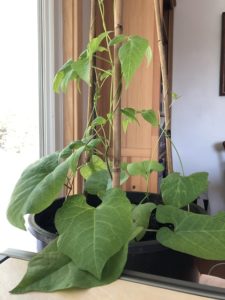
It started out as a fun and friendly competition between my husband’s grandparents (Jennifer and Alan), a relative in the UK named David, and my husband and I. I guess you could call it an international challenge. We grow one vegetable — the Scarlet Runner Bean. Some of you might know this obscure bean with the beautiful red flowers that attracts bees much the same way that kids are drawn to gum ball machines. And if prepared and cooked right, the beans are delicious.
We judge ourselves every year by the height, fullness and production of our plants. In the seven years of this competition, the Canadians have never won. 😥 Maybe the Brits’ milder weather has something to do with it. But as I sit here watching my two-foot high runner beans climb up the windowsill in mid-April, I know that this year there’s hope.
Right here in the Madawaska Valley, a similar sort of competition is gaining momentum. And it’s kind of a big dill (pun intended). The Madawaska Valley Gardening Club is encouraging (I would say challenging) everyone in the Valley to grow vegetables this season. Whether it be in a planter, window box or backyard plot, get dirty and plant whatever mouth-watering vegetables, herbs or fruit your taste buds enjoy most.
And to help you out, club members are giving you a series of articles on how to get started. As a bonus, if you post any gardening questions in the Comments section below, our horticultural members will answer them online.
Seed Starting 101: My tips and tricks
By propagating your own plants, seedlings will have a nice, controlled environment which protects them, when they are most fragile, from insects and animals. It’s amazing to see them transform. Starting seedlings is also a cost-effective way to garden, as a packet of 20 seeds is usually the same price as one plant from a greenhouse.
I’m rooting for you!
Any container will work to start your seedlings — some of my favourite around-the-house items, usually found in the recycling bin, include yogurt cups, margarine containers, cut-off milk containers, egg cartons, plastic lettuce bins and used toilet paper rolls cut in half. Just make sure you poke holes in the bottom for proper drainage and that the containers can hold at least 3/4 to 2 inches of soil. Other store-bought options include terracotta planters, plastic, peat or coconut fibre containers or starter trays. If you are reusing garden containers, just make sure they are properly cleaned (1 part bleach to 9 parts water) to destroy any left over fungus, that could wreak havoc later on.
Seeds germinate best in warm temperatures, somewhere between 18-23 degrees Celsius (65-75 degrees Farenheit). Don’t get too hung up on the numbers though, they just like warmth a bit above room temperature so place them in a nice sunny window near a heat source and they should do just fine. Commercially available heat mats are also a handy tool but aren’t necessarily needed. Water your seedlings lightly — use a spray bottle or watering can. Make sure the soil is moist but not sopping wet.
And remember to label your plants! So many seedlings look alike. Old popsicle sticks, cut out plastic yogurt containers or just labelling the outside of your pot does the trick.
Thyme it right!
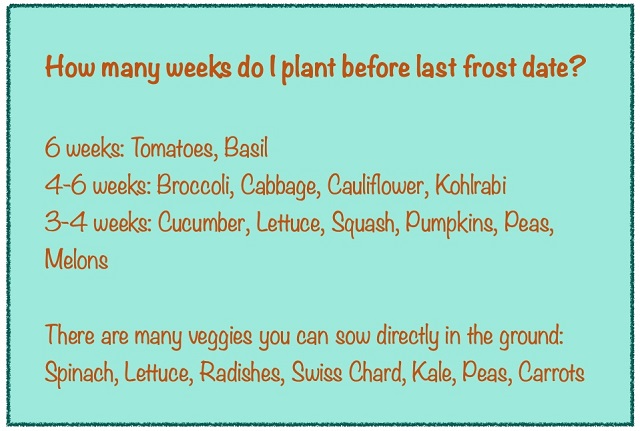
The first time I started seedlings, I planted everything all at once. Big Mistake. All plants germinate and grow differently. Beans will grow within days, whereas parsley seeds take weeks. I find it handy to look at my seed packages and mark a calendar for myself so I know how many weeks I should start my seeds before the average last frost date. You can transplant most seedlings (in our region) by the end of May but I’m sure many might debate me on that. I think it’s best to follow the weather, farmers almanac, and use your instincts to decide when to plant your seedlings outdoors and always have a plan B (some sort of covering if we get a flash freeze or snowstorm). Yikes!
Planting seeds doesn’t have to be complicated or expensive. And best of all, it’s fun! So go ahead, get a little dirty and maybe, you might just want to start a little competition of your own.
About the author: Stephanie Park is a member of the Madawaska Valley Garden Club/Horticultural Society, an avid vegetable gardener and — fingers crossed — this year’s Scarlet Runner Bean winner.
photos Stephanie Park
Hi Gail,
I always plant beans on June 1. In this way, even if I get very late frost in the first week of June, which happens once in a while on our Wilno hill garden, they wouldn’t have been germinated. If you start anything indoors, you’d have to not just take care of them every day, but also you’d need to harden them off before transplanting them outside, and they’d have to recover from the transplanting shock. All these troubles take time, and after all you wouldn’t save any time. Be patient!!
Starting beans indoors isn’t recommended, as their roots are fragile so they don’t like being transplanted. Besides, there’s really no advantage over starting them outside, as they’re such a fast-growing crop. For me, simple is always better, so I just direct-seed them in the garden, after last frost and the ground has warmed up a bit. Around here that’s usually end of May or early June.
Hi… wondering about starting beans indoors… yellow wax and pole. Is this a good idea or is it better to wait and plant directly in my garden?
Hi Linda!
Terry and Ritsuko are right, the seedlings definitely need a good light source and turning them around everyday helps them to grow much straighter instead of falling over. Providing more light is probably what your seedlings need most. Other common causes of leggy seedlings can also be too much heat. If you are using a heat mat it causes the seeds to sprout up quickly and they can become leggy, so make sure to take them off the heat mat 2-3 days after sprouting. Another cause could be overcrowding of seedlings and as they try to grow taller to compete for light. Let us know how you get along! And best of luck!
If the seedlings are growing on your windowsill, you can put them as close as possible to the window in the daytime, and take them a bit away at night to protect them from the cold. Make sure to turn them around every day so that they can grow both sides. You can also make sure the soil is firm so that baby plants can grow strong roots without going through air pockets. Even with a bit leggy stems, if seedlings have strong root systems, they can hold their stems up. Good luck!!
Hi, Linda. Seedlings love full sun, but there just isn’t much yet this spring, and electric lights provide even less. So the seedling strains to get closer to that light source. If you’re using fluorescent lights, the closer you can get the seedling to the bulb, the less they’ll stretch up. Gently stake the ones that are already leggy; I like bamboo skewers and yarn. And if they’re tomatoes, you’re in luck – when you transplant them into your garden, you can bury all that extra stem underground, leaving just a few leaves above the soil. Extra roots will grow from the buried stem!
Hi: started some seedlings and noticing they are very leggy and falling over, how do I correct this?