

Valley residents, some wearing orange as a symbol of reconciliation, gathered across the Valley on the evening of May 31 to commemorate the remains of the 215 children found in a mass grave at Kamloops Residential School. The socially-distanced mourners brought children’s shoes and toys to highlight the grim discovery that some of the children were as young as three years. Above shoes at Pembroke. Below mourners at Pembroke. Photos Timothy J. Baklinski.
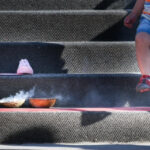
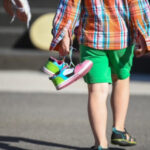
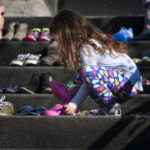
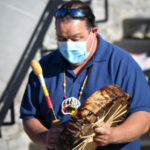
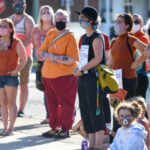
Pembroke: An estimated 60 people, including many children, met at the Pembroke Catholic cathedral to witness a memorial ceremony conducted by local Indigenous people, some of them descendants of residential school survivors. One posted on social media, “I sang the Lukahadi crying song and then the Algonquins closed with a travel song. This was so healing for us all!”
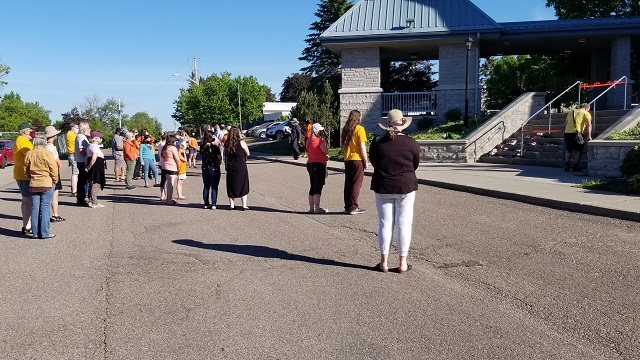
Eganville: About 40 people gathered at St. James the Less Catholic church in Eganville. See above. Photo Mark Woermke. Quite a few of them placed shoes on the steps before standing in silent commemoration to show solidarity with the ceremony being held by the Algonquins of Pikwakanagan First Nation. Barry’s Bay resident Mark Woermke said, “We didn’t have shoes to place, but we heard from our Catholic friends in Eganville that this was happening. We wanted to support them in this gesture to encourage their church and other churches and governments to apologize and make reparations for the injustices committed through the residential school system.”
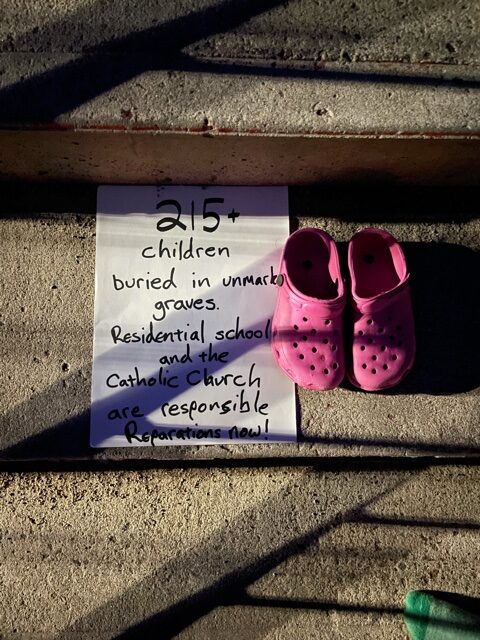
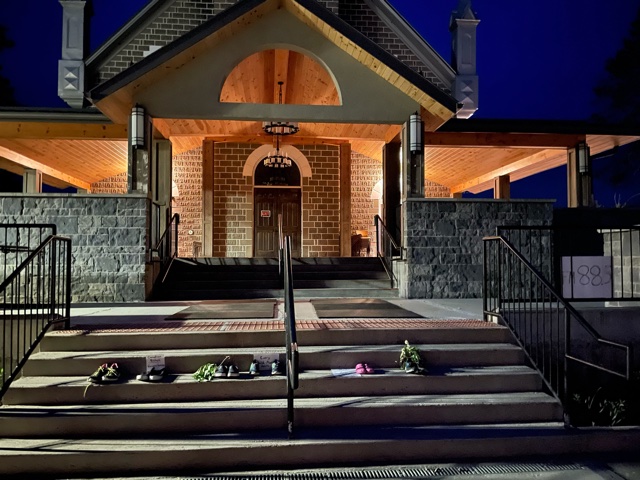
Barry’s Bay: Later that evening attendees of the Pembroke ceremony stopped at St. Hedwig’s Roman Catholic Church in Barry’s Bay where a few pairs of shoes had been placed in commemoration. See above. Photos Jenny Baklinski
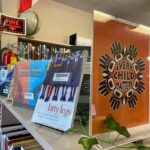
Also in Barry’s Bay, staff at the Madawaska Valley Public Library are helping library patrons understand about reconciliation and the legacy of the residential school system. They have printed out several copies of a reliably sourced information booklet created by the On Canada Project about this tragic discovery, and also have books on residential schools, reconciliation and Indigenous communities on display available for check out. Click HERE for information from the On Canada Project. Photo Facebook
Pikwàkanagàn:
Chief Wendy Jocko thanked attendees at Pikwàkanagàn for their presence “to honour the memory of the Kamloops Indian Residential School children and to support friends, family and relatives of the disappeared.” Below photo YouTube

After a sombre moment of silence, she continued, “The Algonquins of Pikwàkanagàn First Nation stand in solidarity and in ceremony with first nations across Turtle Island. Residential schools and the damage they cause still form an open wound. As we peel away the layers of lies and myths surrounding the treatment of Indigenous peoples in this county, few horrors seem impossible. The loss of life from abuse, neglect, mistreatment is hard to grasp. It is hard to imagine anything more devastating. Mine, yours, ours, children have died. Their lives have been taken from them in an act of violence, of genocide. Our hearts break for what our children have endured. We think of their relatives and their descendants that would have been. This has compounded an intergenerational loss felt throughout Turtle Island and the world.”
Jocko reminded those present of a loss close to home, saying “We pray for our member 13-year-old Joey Commanda who ran away from the residential school and was tragically killed as he tried to make [it to] his home here in Pikwàkanagàn in 1968.”
Her final words were, “We will remember you.” The ceremony then continued as those present, dressed in orange, proceeded to remember the 215 children and more with drumming, dance and song. Follow link below to see Jocko’s address and some of the memorial ceremony at the Pow Wow grounds.
Prayers for the children and hell to the liars.